
Hit by a car as a pedestrian in Georgia: what to do, step by step
A pedestrian has nothing to protect them from a car. We explain what to do first, what to keep, what not to say and what Georgia law says about crossings. The initial consultation is free.
If a car hit you while you were walking, crossing the street or in a parking lot, your health comes first. This guide tells you what to do next, step by step.
In Georgia, a driver must stop and stay stopped to let a pedestrian cross within a crosswalk when the pedestrian is on the driver's half of the road, or is approaching and within one lane of that half (O.C.G.A. § 40-6-91). A pedestrian crossing outside a crosswalk must yield to vehicles (O.C.G.A. § 40-6-92). Even so, every driver must use due care to avoid hitting a pedestrian (O.C.G.A. § 40-6-93).
This page is general information about Georgia law. It is not legal advice for your case. Every case is different and the rules have exceptions. To talk about your situation, call us at (770) 609-9396.
The first 24 hours
Do these steps in this order, if you can do them safely.
Call 911
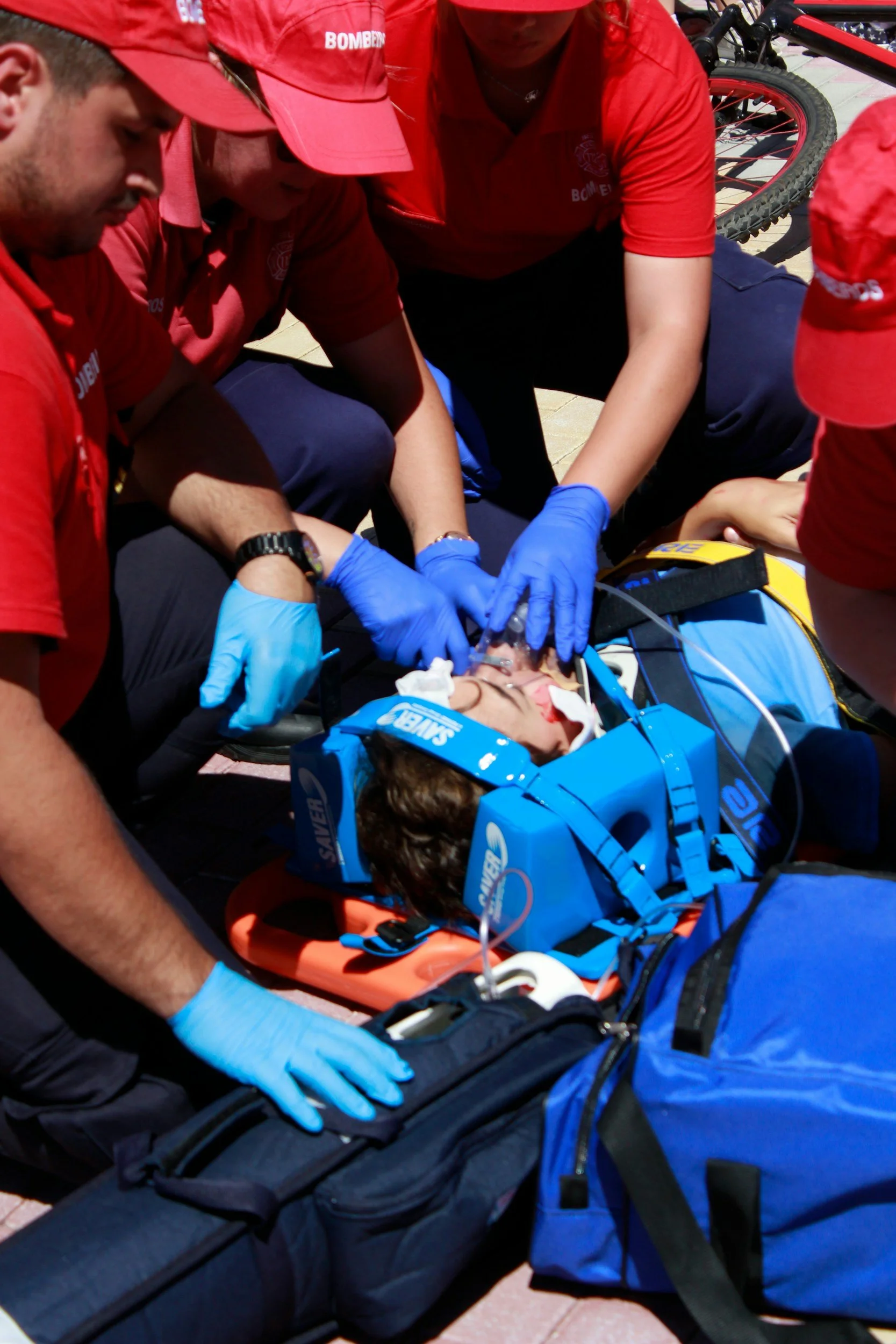
Ask for medical help and for the police to come. If you can move safely, get out of the street. If your neck or back hurts, wait for the paramedics.
Accept medical care
If anything hurts, tell the paramedics. Many injuries, like neck or back injuries, feel worse hours or days later. If you do not go by ambulance, go to an urgent care clinic or the emergency room today.
Get the driver's information
Ask for the driver's name, phone number, license, plate and insurance company. If the driver leaves, write down or photograph the plate, color and make of the car.
Ask for the report number
Before the police leave, ask for the officer's name, the agency (city, county or State Patrol) and the accident report number. You will need it to request a copy.
Talk to witnesses
If anyone saw what happened, ask for their name and phone number. Ask whether they recorded anything on their phone. Witnesses leave quickly and this information is very valuable.
Photograph the scene
Photograph the crossing, the painted lines, the signal or signs, the lighting, the car and your injuries. If no one can take them today, ask someone to go back soon, before anything changes.
Write down what happened
That same night, write down or record a voice note with everything you remember: the time, the place, what you were doing, what you saw and what people told you. Details fade quickly.
The next few days
Go to your medical appointments
Follow your doctor's instructions and go to every medical appointment. If you stop going, the insurer may say you were not hurt. If you do not have health insurance, tell us and we will explain what options may exist.
Keep a recovery journal
Write down each day how you feel, what you cannot do, the work days you missed and your trips to the doctor. Take photos of your injuries as they heal.
Look for cameras nearby
Nearby businesses, gas stations and homes may have cameras. Many systems erase video within days, so ask, or tell us quickly where a camera may be.
Check your own insurance
If the driver has no insurance or too little, your own auto policy may have uninsured motorist (UM) coverage. In Georgia, policies include it unless an insured named in the policy rejects it in writing (O.C.G.A. § 33-7-11). Whether that coverage protects you as a pedestrian depends on each policy.
Be careful with calls from the other insurer
The other side's adjuster may call you soon and sound very friendly. The adjuster works for the other side, not for you. You can give your name and our number, and say you prefer to talk to your lawyer first.
Keep the deadlines in mind
In Georgia, an injury lawsuit generally must be filed within 2 years (O.C.G.A. § 9-3-33). If the vehicle or the property belonged to a city, a county or the state, a written notice is due much sooner: generally 6 months for a city (O.C.G.A. § 36-33-5) and 12 months for a county (O.C.G.A. § 36-11-1) or the state (O.C.G.A. § 50-21-26). There are exceptions. Do not wait until the last minute.
Estimate the general accident deadlines →
What to keep
Keep everything in one folder or in an album on your phone. Do not throw anything away, even if it seems unimportant. If you are missing something, do not worry; bring us what you have.
- The police report number and the agency name
- The driver's information, plate and insurance
- Photos of the crossing, the signs, the car and your injuries
- Witness names and phone numbers
- The clothes and shoes you were wearing, unwashed
- The declarations page of your own auto policy, if you have one
- Papers from the ambulance, the emergency room, the doctor and the pharmacy
- Medical, prescription and travel-to-the-doctor bills and receipts
- Pay stubs or a letter from work showing the days you could not work
- Letters, emails and messages from any insurance company
- Your pain and recovery journal
What not to say
What you say after an accident can be used to deny or reduce your claim. These are things to avoid and what to do instead.
Avoid
Saying “I didn't see it coming, it was my fault”
Even if you crossed outside the crosswalk, the driver also has a duty to use care. Fault is decided by the facts, not by what you say when you are shaken up at the scene.
Instead
“I need medical care. Let's wait for the police.”
Avoid
Saying “I'm fine, nothing happened to me”
Many injuries show up later. If you say you are fine and then you are in pain, it will be harder to prove your injury.
Instead
“I don't know yet if I'm hurt. I'm going to see a doctor.”
Avoid
Giving a recorded statement to the other side's insurer
They will ask questions to look for contradictions or to get you to say you are not badly hurt. You can ask them to contact your lawyer.
Instead
“I'd rather you talk to my lawyer. Here is the number: (770) 609-9396.”
Avoid
Signing papers or accepting a quick check
A check or a form may include a release of your claim. Once signed, it can be hard or impossible to undo.
Instead
“I need my lawyer to review this first.”
Avoid
Posting on social media
Insurers can look at Facebook, Instagram, TikTok and other sites. A smiling photo can be used to say you are not hurt.
Instead
Do not post anything about the accident or your health while your case is open.
If you do not have papers
Many people who call us have this worry. You are not alone. This is what we recommend.
You can call us
Your immigration status does not stop you from calling us or talking to a lawyer. We speak Spanish. We handle your information with care and confidentiality.
Always tell the truth
Do not give false names or documents to the business, the doctor or the insurer. If something worries you, tell us privately and we will advise you.
Your injury case and your immigration situation are separate matters
If your status could affect part of your claim, for example lost wages, we will explain it in the consultation. If you have immigration questions, our firm also has an immigration team.
JLA immigration team →How we work on your case
These are the usual steps. Every case is different and we cannot promise a result, but we will explain each step.
1
You call us
Call (770) 609-9396 or write to us online. The initial personal injury consultation is free. We listen, review what you have and explain your options in plain words. Calling does not obligate you and does not, by itself, create an attorney-client relationship.
Write to us online →2
A written agreement
If you decide to hire us, we sign an agreement that explains the fees, the case costs and what happens if there is no recovery. Ask anything you want before you sign.
3
We talk to the insurers
We tell the insurers you have a lawyer and ask them to contact us. That way you can focus on your health.
4
We gather the evidence
We request the police report, look for witnesses and nearby camera video, review the crossings and signs at the scene, identify which insurance may apply and gather your medical records and bills.
5
You focus on healing
Your job is to go to your medical appointments and follow your doctor's instructions. We keep you informed and answer your questions in Spanish or English.
6
Claim and negotiation
When there is enough medical information, we prepare a claim with your expenses and losses and negotiate with the insurer. No settlement is accepted without your permission.
7
If there is no fair settlement
We explain the option of filing a lawsuit, the deadlines and the risks. You make the final decision.
Frequently Asked Questions
Who has the right of way in a crosswalk?
The driver must stop and stay stopped to let a pedestrian cross within a crosswalk when the pedestrian is on the driver's half of the road, or is approaching and within one lane of that half (O.C.G.A. § 40-6-91). Each case depends on the facts and the signals at the scene.
Can I make a claim if I crossed outside the crosswalk?
Possibly. A pedestrian crossing outside a crosswalk must yield (O.C.G.A. § 40-6-92), but every driver must use due care to avoid hitting a pedestrian (O.C.G.A. § 40-6-93). Your compensation may be reduced by your share of fault.
What if I was partly at fault?
In Georgia, compensation is reduced by your percentage of fault. If you are 50% or more at fault, you cannot recover damages (O.C.G.A. § 51-12-33). That is why you should not accept blame at the scene. Let the facts be reviewed.
What if the driver left without stopping?
A driver involved in a crash with injuries must stop and help (O.C.G.A. § 40-6-270). Report it to the police right away. Your own uninsured motorist (UM) coverage may help in some cases, depending on your policy.
How long do I have to make a claim?
In general, an injury lawsuit in Georgia must be filed within 2 years (O.C.G.A. § 9-3-33). If a city, county or state vehicle was involved, the written notice is due much sooner. There are exceptions. Call us soon.
Can I make a claim if I do not have papers?
Your immigration status does not stop you from calling us or talking to a lawyer. If your status could affect part of your claim, for example lost wages, we will explain it in the consultation. We handle your information with care and confidentiality.
How much does it cost?
The initial personal injury consultation is free. Before hiring the firm, ask about attorney fees, case costs, when they are charged and what happens if there is no recovery. The written agreement explains the terms of representation.
Applicable Laws
These are the laws and official sources cited in this guide. Tap one to read the full text.
O.C.G.A. § 40-6-91The driver must stop to let a pedestrian cross in the crosswalk.
O.C.G.A. § 40-6-92A pedestrian crossing outside a crosswalk must yield.
O.C.G.A. § 40-6-93Every driver must use due care to avoid hitting a pedestrian.
O.C.G.A. § 40-6-270Driver's duties after a crash: stop, give information and help.
O.C.G.A. § 51-12-33Compensation is reduced by your share of fault; no recovery if you are 50% or more at fault.
O.C.G.A. § 9-3-33General 2-year deadline for personal injury lawsuits.
O.C.G.A. § 33-7-11Uninsured motorist (UM) coverage, included unless rejected in writing.
O.C.G.A. § 36-33-5Written notice to a city within 6 months.
O.C.G.A. § 36-11-1Claims against a county within 12 months.
O.C.G.A. § 50-21-26Written notice to the state within 12 months.
Related Services
Other Personal Injury Services







Free Consultation
Talk to a pedestrian accidents attorney today.
Schedule Consultation(770) 609-93961250 Tech Dr, Suite 240
Norcross, GA 30093
📋
Document Checklist
See the documents you need for your pedestrian accidents case. Complete list organized by category.
View full list →Don't Wait. Every Day Counts.
The law has deadlines. Protect your rights today.
JLA explains it on video
Hear from our team. These educational videos do not replace an attorney’s review of your situation or changes in the rules.