

What Is the H-1B Specialty Occupation Visa?
The H-1B visa is one of the most sought-after nonimmigrant work visas in the United States. It allows U.S. employers to temporarily employ foreign workers in specialty occupations that require the theoretical and practical application of a body of highly specialized knowledge. Governed by Section 101(a)(15)(H)(i)(b) of the Immigration and Nationality Act (INA) and the implementing regulations at 8 CFR 214.2(h), the H-1B visa program plays a critical role in helping American companies fill positions that require advanced expertise in fields such as engineering, information technology, medicine, law, accounting, architecture, and the sciences.
At J. Lee & Associates, we regularly assist both employers and prospective employees in the greater Atlanta and Norcross, Georgia area with H-1B visa petitions. Understanding the requirements, timelines, and potential pitfalls of this process is essential for a successful outcome.
Who Qualifies for an H-1B Visa?
To qualify for H-1B classification, the position offered must meet the definition of a "specialty occupation" under INA Section 214(i)(1). A specialty occupation is one that requires:
- Theoretical and practical application of a body of highly specialized knowledge
- Attainment of at least a bachelor's degree (or its equivalent) in the specific specialty as a minimum for entry into the occupation
USCIS evaluates whether a position qualifies as a specialty occupation by applying a four-part test under 8 CFR 214.2(h)(4)(ii). The position must meet at least one of the following criteria:
- A bachelor's or higher degree (or its equivalent) is normally the minimum requirement for the particular position
- The degree requirement is common to the industry in parallel positions among similar organizations, or the job is so complex or unique that it can only be performed by an individual with a degree
- The employer normally requires a degree or its equivalent for the position
- The nature of the specific duties is so specialized and complex that the knowledge required to perform them is usually associated with the attainment of a bachelor's or higher degree
The beneficiary (the foreign worker) must also demonstrate that they hold at least a U.S. bachelor's degree or its foreign equivalent in the relevant field, or have a combination of education and progressively responsible work experience that is equivalent to the required degree. USCIS uses an evaluation process where three years of specialized work experience may be considered equivalent to one year of college education, as outlined in 8 CFR 214.2(h)(4)(iii)(D).
The H-1B Cap and Annual Lottery
Congress has set an annual numerical cap of 65,000 H-1B visas for the regular category, plus an additional 20,000 visas for beneficiaries who hold a U.S. master's degree or higher (commonly called the "master's cap"). Because demand consistently exceeds these limits, USCIS conducts a random selection process, often referred to as the "H-1B lottery."
As of the fiscal year 2025 registration period, USCIS implemented a beneficiary-centric selection process designed to reduce duplicate registrations. Under this system, each unique beneficiary is entered into the lottery only once, regardless of how many employers submit registrations on their behalf. This change, codified through a final rule published in the Federal Register, was intended to give each prospective worker a fairer chance of selection.
Certain employers are exempt from the annual cap. These cap-exempt employers include institutions of higher education, nonprofit research organizations affiliated with institutions of higher education, and governmental research organizations, as specified in INA Section 214(g)(5).
The H-1B Petition Process Step by Step
Filing an H-1B petition involves several distinct stages that employers and their immigration attorneys must navigate carefully:
1. Determine the Prevailing Wage
Before filing, the employer must obtain a prevailing wage determination (PWD) from the Department of Labor (DOL). The prevailing wage is the average wage paid to similarly employed workers in the same occupation and geographic area. This requirement ensures that hiring foreign workers does not adversely affect the wages of U.S. workers in similar positions.
2. File a Labor Condition Application (LCA)
The employer must file a certified Labor Condition Application (LCA) with the DOL using Form ETA-9035. The LCA contains several attestations, including that the employer will pay the H-1B worker at least the prevailing wage or the actual wage paid to other employees with similar experience and qualifications, whichever is higher. The employer must also attest that working conditions will not adversely affect other similarly employed workers, that there is no strike or lockout at the place of employment, and that notice of the filing has been provided to co-workers. These obligations are detailed in INA Section 212(n) and 20 CFR Part 655, Subpart H.
3. File Form I-129, Petition for Nonimmigrant Worker
Once the LCA is certified, the employer files Form I-129 with USCIS, along with the H Supplement and supporting documentation. Supporting evidence typically includes the certified LCA, proof of the beneficiary's qualifications (degrees, transcripts, credential evaluations, experience letters), a detailed description of the job duties, evidence that the position qualifies as a specialty occupation, and evidence of the employer's ability to pay the offered wage.
4. Consular Processing or Change of Status
If the beneficiary is outside the United States, they will apply for an H-1B visa stamp at a U.S. consulate or embassy abroad after the petition is approved. If the beneficiary is already in the United States in valid status, the employer may request a change of status as part of the I-129 petition.
Common Challenges and How to Overcome Them
H-1B petitions face several recurring challenges that applicants should be prepared for:
Requests for Evidence (RFEs): USCIS frequently issues RFEs questioning whether the position qualifies as a specialty occupation, particularly for roles in business, management, or general IT fields. To overcome an RFE, it is critical to provide detailed evidence showing the complexity of the role and the specific educational requirements. Expert opinion letters, detailed job descriptions, and industry data can strengthen your response.
Wage Level Disputes: USCIS has in the past scrutinized petitions where the offered wage corresponds to a Level 1 (entry-level) wage on the LCA, arguing that entry-level positions cannot be specialty occupations. While court decisions such as Innova Solutions, Inc. v. Baran (2021) have pushed back against blanket denials based solely on wage level, employers should be prepared to explain their wage determinations.
Third-Party Worksite Issues: When an H-1B worker will be placed at a third-party client site, USCIS requires additional documentation, including contracts, work orders, and itineraries establishing that the specialty occupation work will be performed for the duration of the requested validity period, pursuant to the Defensor v. Meissner framework and subsequent USCIS guidance.
H-1B Portability and Extensions
One significant benefit of H-1B status is the portability provision under INA Section 214(n), also known as the "AC21 portability" rule. An H-1B worker who has a pending or approved H-1B petition may begin working for a new employer as soon as the new employer files a non-frivolous H-1B petition on their behalf, without waiting for USCIS approval.
H-1B status is initially granted for up to three years and can be extended for a total maximum stay of six years. However, certain beneficiaries who are the subject of a pending or approved labor certification (PERM) or I-140 immigrant petition may qualify for extensions beyond the six-year maximum under Sections 104(c) and 106(a) of the American Competitiveness in the Twenty-First Century Act (AC21).
Why Work with an Experienced Immigration Attorney?
The H-1B process involves complex legal and regulatory requirements that can trip up even experienced HR departments. An experienced immigration attorney can help ensure that the position description is drafted to clearly establish specialty occupation requirements, that the wage level and LCA are properly prepared, that supporting documentation anticipates and addresses potential USCIS concerns, and that the petition is filed within all applicable deadlines.
At J. Lee & Associates, our immigration team has extensive experience handling H-1B petitions for employers across a wide range of industries in the Norcross and greater Atlanta area. We understand the nuances of specialty occupation adjudications and work closely with our clients to build the strongest possible case.
Contact Us Today
If you are an employer seeking to hire a foreign professional or a worker hoping to obtain H-1B status, we can help you navigate the process from start to finish. Contact J. Lee & Associates at (770) 676-4445 for a confidential consultation. Our office is located at 1250 Tech Dr, Suite 240, Norcross, GA 30093. We are ready to assist with your H-1B petition and help you achieve your immigration goals.
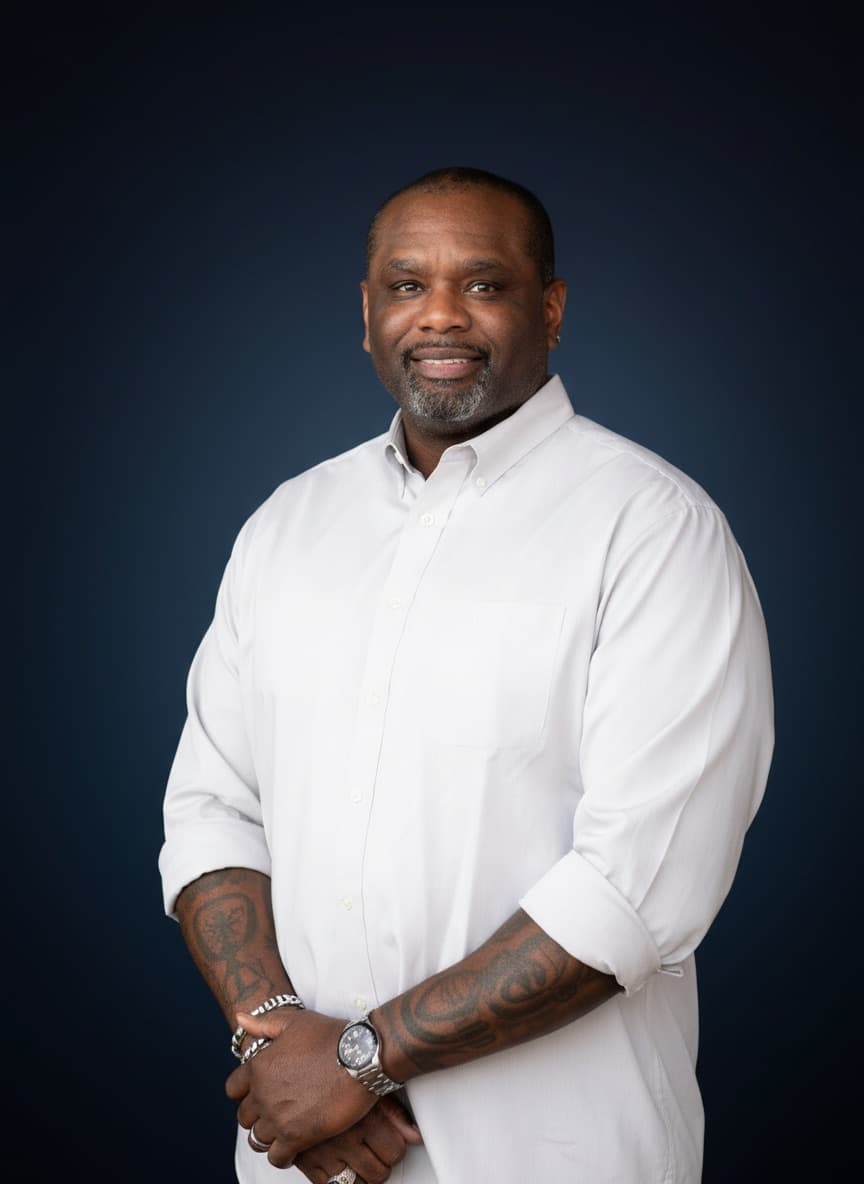
Jerome D. Lee is the founding attorney of J. Lee & Associates Law Group, representing clients in personal injury, immigration, criminal defense, and family law throughout Metro Atlanta.
View full bio →Related Articles
Immigration Questions? We Speak Your Language
From green cards to deportation defense, our bilingual team is here to help. Schedule a consultation today.
Get Free Legal Updates
Weekly articles on your rights in Georgia. No spam.
By subscribing you agree to receive legal information. Unsubscribe at any time.